
“A good headline keeps 90% of the copy being read.” – Claude Hopkins
If you have spent any time looking at conversion data, you have probably run into that quote. It gets thrown around by modern growth hackers, conversion rate optimization experts, and Twitter marketing gurus every single day.
But the man who first said it did not have a Google Analytics dashboard. He did not have Facebook pixels, heatmaps, or split-testing software.
He had ink, paper, mail-in coupons, and an absolute obsession with human psychology.
His name was Claude Hopkins.
I still remember the first time I cracked open his work back in 2017. I read the first little bit, and it immediately sparked something… but it wasn’t until 2021 that it truly broke me open.
I was sitting right on the beach here in Prince Edward Island, listening to Scientific Advertising and My Life in Advertising back to back.
Hearing his principles laid out while looking at the ocean completely rewired the circuitry of how I look at marketing.
Hopkins laid the absolute bedrock for everything we do today: put an advertisement out, get a response, measure it down to the penny, and scale what is working.
Who Was Claude Hopkins?
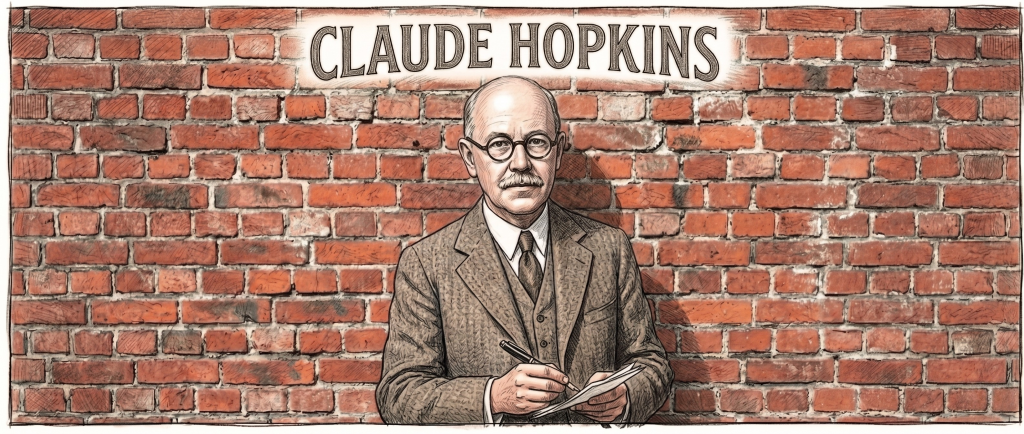
Claude Hopkins was not an academic. He was an operator. (See his Wikipedia here.)
Born in 1866, he grew up in a strict, impoverished household with a mother who taught him the value of extreme frugality. That obsession with the value of a dollar followed him straight into the commercial world. When he looked at an ad, he did not ask if it looked pretty… he asked how many dollars it brought back.
By the early 1900s, he was hired by Albert Lasker at the legendary agency Lord & Thomas.
To give you an idea of how good this guy was, Lord & Thomas paid him an unprecedented annual salary of $185,000. In the early decades of the 20th century, that was an astronomical amount of cash… the equivalent of well over $3 million a year in today’s money just to write advertisements.
He did not get paid that money to be creative. He got paid because his words built empires.
- Schlitz Beer: He took a brand lagging in fifth place and drove it to tie for first in the market.
- Pepsodent: He practically invented the global habit of daily tooth brushing by highlighting the invisible “film” on people’s teeth.
- Palmolive: He turned a simple soap blend into a massive household staple by focusing on ancient beauty secrets.
- Van Camp’s Pork and Beans: He convinced millions of households to stop baking beans at home by proving commercial canning saved hours of labor.
He did not achieve this by guessing. He achieved it by building a system.
Claude Hopkins and the Twin Bibles of Direct Response
To truly understand how Claude Hopkins operated, you cannot just look at his theories. You have to look at his scars. He left behind two distinct masterpieces that map out his entire worldview… one is the manual of rules, and the other is the psychological memoir of how he actually deployed them in the trenches.
1. Scientific Advertising (1923)
This is the strategic playbook.
It is a short, punchy manual that is widely considered required reading for anyone who wants to understand the absolute mechanics of persuasion.
David Ogilvy famously said that nobody should be allowed to have anything to do with marketing until they had read that book seven times.
The core argument is beautifully simple: Advertising is not a creative art project. It is a fixed science.
“The only purpose of advertising is to make sales. It is profitable or unprofitable according to its actual returns.”
Hopkins viewed advertising as nothing more or less than salesmanship multiplied.
Instead of a salesperson standing on a doorstep talking to one prospect at a time, a master of direct response copywriting allows that salesperson to speak to millions at the exact same moment.
But the rules do not change just because the medium expands.
If you would not stand on someone’s porch and sing a jingle or show them an abstract painting to get them to buy a vacuum cleaner, you should not do it in your copy either.
This scientific view directly separates the direct response lineage from general branding. Decades later, figures like Edward Bernays would approach mass persuasion from a top-down, psychological PR angle designed to manipulate cultural narratives.
But Hopkins did not care about changing culture for the sake of it.
He cared about tracking the direct, mathematical result of a single piece of text.
For Hopkins, if a layout, a headline, or an offer could not be measured, tracked, and proven to return a profit… it was completely worthless.
2. My Life in Advertising (1927)
If Scientific Advertising is the textbook, My Life in Advertising is the autobiography of a man who worked himself to the bone to prove his theories right.
Written at the end of his career, this book is the raw, street-level record of his multi-million-dollar campaigns, his catastrophic mistakes, and the massive business breakthroughs that built brands like Pepsodent and Schlitz.
The core argument here shifts from tactical rules to human nature: To sell to the masses, you must intimately understand the psychology of the individual.
Hopkins uses his own life story to show that brilliant marketing isn’t born in a boardroom… it’s born from observing everyday people, understanding their habits, and identifying their friction points.
It is in these pages that he breaks down the reality of marketing labor… explaining how he spent weeks living near factory workers or talking to homemakers just to find the single, specific hook that would make an ad convert.
For the modern digital operator, this book holds the ultimate lesson in market research.
Hopkins proved that you cannot write an irresistible offer from an ivory tower.
You have to enter the conversation already happening in the prospect’s mind.
It serves as both a masterclass in consumer empathy and a stark warning about the sheer volume of work required to dominate a market.
Reading it doesn’t just teach you how to write copy… it teaches you how to think like a strategic business architect.
Claude Hopkins Rules That Still Print Money
The reason Hopkins is the grandfather of digital marketing is that his exact methodology map directly onto modern tools. He did not have the internet, but he built mechanisms that functioned exactly like it.
Here are the four core Hopkins principles that you can pull out and deploy inside your business right now.
1. Track Everything (Coupons Then = Pixels Now)
People think data-driven marketing started with media buying platforms. It did not. Hopkins was doing it with physical mail.
He would run the exact same ad with slightly different headlines or offers in different newspapers. At the bottom of each ad, he placed a coupon for a free sample or a specific product variant. Each coupon had a unique tracking code printed in the corner… a manual UTM parameter.
When the letters flooded into the warehouse, his team counted every single coupon. If Headline A brought in 500 redemptions and Headline B brought in 50, Headline A won.
Today, we use Facebook ads tracking pixels, Google tracking links, and custom dashboards. But the mindset is identical. If you are running traffic to a landing page without knowing your precise cost per acquisition, your click-through rates, and matching it to a targeted ideal client avatar… you are just guessing. Hopkins proved that guessing is the fastest way to go broke.
2. Specifics Beat Generalities
This is where most modern copywriters completely lose the plot. They use lazy, bloated adjectives like “the best quality,” “world-class service,” or “ultimate performance.”
Hopkins warned that platitudes and generalities roll off the human understanding like water from a duck. They leave no impression whatever because people automatically discount them as expected sales talk.
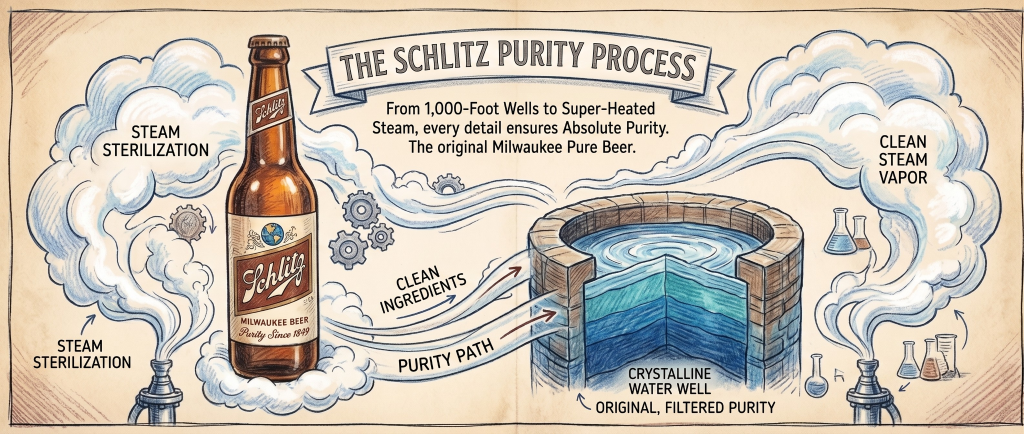
His work with Schlitz Beer is the ultimate textbook case of this rule. At the time, every beer company was running massive ads shouting about how their beer was “Pure.” The ads did nothing because every competitor said the exact same thing.
Hopkins went to the Schlitz brewery. He saw that they cleaned every pipe and pump twice daily with live steam to ensure purity. He saw they drilled a 4,000-foot well to get perfectly clean water. He watched them test every batch in a glass-enclosed room filled with filtered air.
He went back and wrote an ad detailing every single one of those specific steps.
The competitors screamed foul. They said, “Everyone cleans their equipment that way! Every good brewery does this!”
But only Schlitz said it. By claiming the specific details of the process, Schlitz owned the concept of purity in the mind of the market. Specifics carry weight because they provide concrete proof.
3. Sell the “Reason Why”
You cannot simply tell someone to buy something. You must give them a logical justification that allows them to rationalize the purchase to themselves and others.
Hopkins realized that human beings are deeply emotional buyers who crave logical cover. If you offer a discount, you need a reason why. If your product works faster, you need a reason why.
If you give people a clear, transparent explanation of how your product is manufactured, why it is priced the way it is, or how your specific mechanism functions, you clear away the natural skepticism that blocks a sale.
4. The Power of the Product Sample
When I think of Hopkins, one of the most exciting breakthroughs that instantly comes to mind is his obsession with sampling. In his books, he essentially created the concept of product sampling as a primary customer acquisition strategy. He knew that the product itself is its own best salesperson… you just have to get it into their hands.
I had a client with a skincare line who wanted to launch a new product into the world. We knew the product was incredible, but manufacturing and mailing out traditional, free mini-samples to cold traffic was simply too expensive for their margins. We were stuck.
So, we leaned entirely on a Hopkins-style strategic reframe.
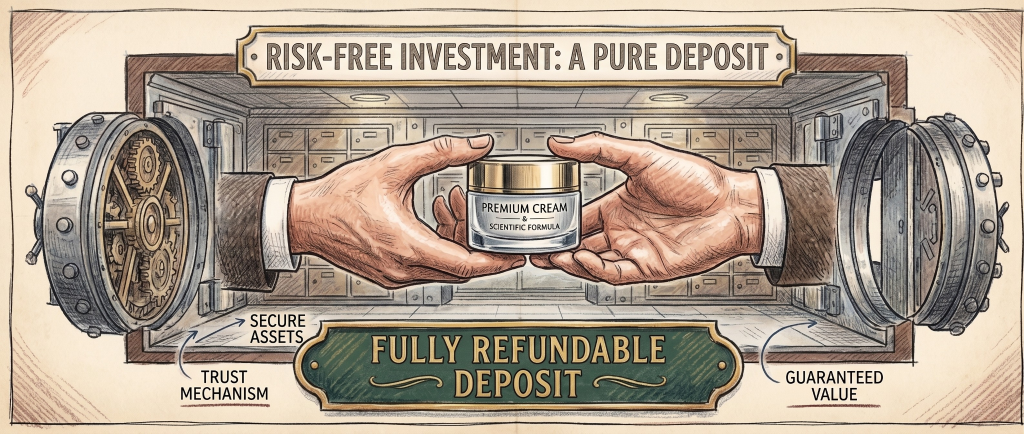
Instead of a “free sample,” we positioned the entire front-end purchase as a fully refundable deposit.
The copy told the prospect to put a deposit down, take the skincare home, and use it risk-free. If it didn’t work, they could instantly get their deposit back. Because we knew the product was bulletproof, we just needed to eliminate the friction of getting it into their hands.
By framing the purchase as a temporary deposit rather than a static sale, the psychological barrier vanished. The business went from doing $2,000 a month to clearing over $42,000 a month in just a few short months. That is the power of a sampling mechanism wrapped in direct response strategy.
What Claude Hopkins Teaches Us Today…
Claude Hopkins was an absolute genius, but his life holds a massive, quiet warning for every talented copywriter and marketer working today.
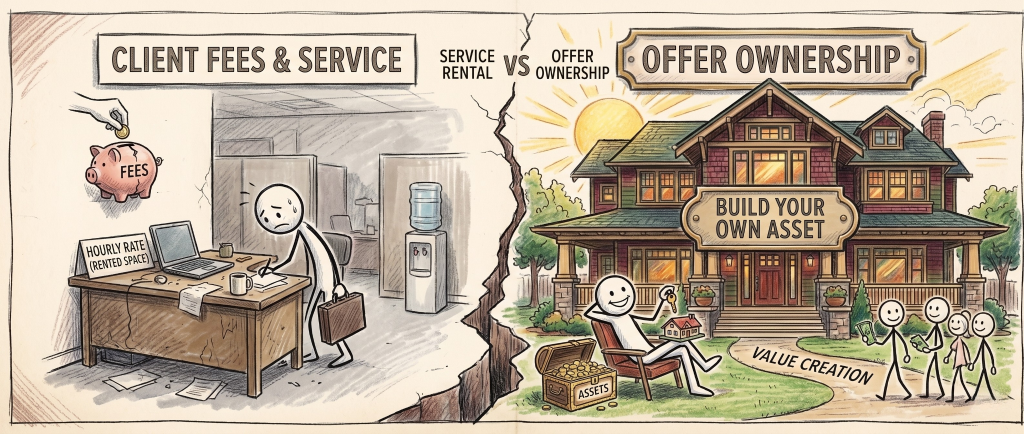
He spent his career renting out his brain. He made millions of dollars in fees and salaries… but he generated billions for his clients. He built the foundational wealth for companies like Pepsodent and Palmolive while remaining an employee, a partner, or a contractor.
He did the labour, but other people owned the equity.
If you want to build true leverage, you have to shift from being a freelancer who writes copy for clients to being an Owner… turning your skills into info-marketing business so you can apply these scientific rules to your own business.
The magic happens when you connect Hopkins’ testing frameworks with the exact execution steps required to create an irresistible offer. When you control the distribution, the tracking, the product, and the copy… you capture the full value of the upside.
Instead of getting a flat fee or a small percentage of a campaign’s success, you build a self-sustaining asset. The methods of scientific advertising are priceless, but they are infinitely more powerful when you use them to build your own house instead of someone else’s.
Frequently Asked Questions
Who was Claude Hopkins?
Claude Hopkins was one of the most influential pioneers of direct response advertising and copywriting. Working in the early 1900s at the Lord & Thomas agency, he became famous for systematizing tracking methods using key-coded coupons and testing frameworks to turn advertising into a predictable science.
What is Scientific Advertising about?
Published by Claude Hopkins in 1923, Scientific Advertising outlines the foundational rules of measurable, results-driven marketing. The book argues that advertising should be treated strictly as salesmanship multiplied, focusing on tracked ROI, specific factual claims, and consumer psychology over creative expression.
Is Scientific Advertising still relevant today?
Yes. While the delivery channels have shifted from newspapers and direct mail to digital funnels and paid social ads, human psychology remains identical. The concepts of tracking variables, testing hooks, and leading with specific benefits are the exact mechanics used by top performance marketers today.
What are Claude Hopkins’ most famous quotes?
Some of his most enduring insights from his writing include:
- “A good headline keeps 90% of the copy being read.”
- “The only purpose of advertising is to make sales.”
- “Platitudes and generalities roll off the human understanding like water from a duck.”
- “Human nature is permanent. In most respects it is the same today as in the time of Caesar.”
Hopkins spent his entire life building frameworks to uncover what already works in the marketplace… bypassing guesswork entirely to find the exact demand people were already feeling.
If you want to pull his timeless, data-driven methodology into the modern digital age without spending years burning money on bad tests, go grab a copy of Stop Selling to Everybody for $29 today. It hands you the exact playbooks needed to find your market, structure your message, and build a high-converting system that scales.