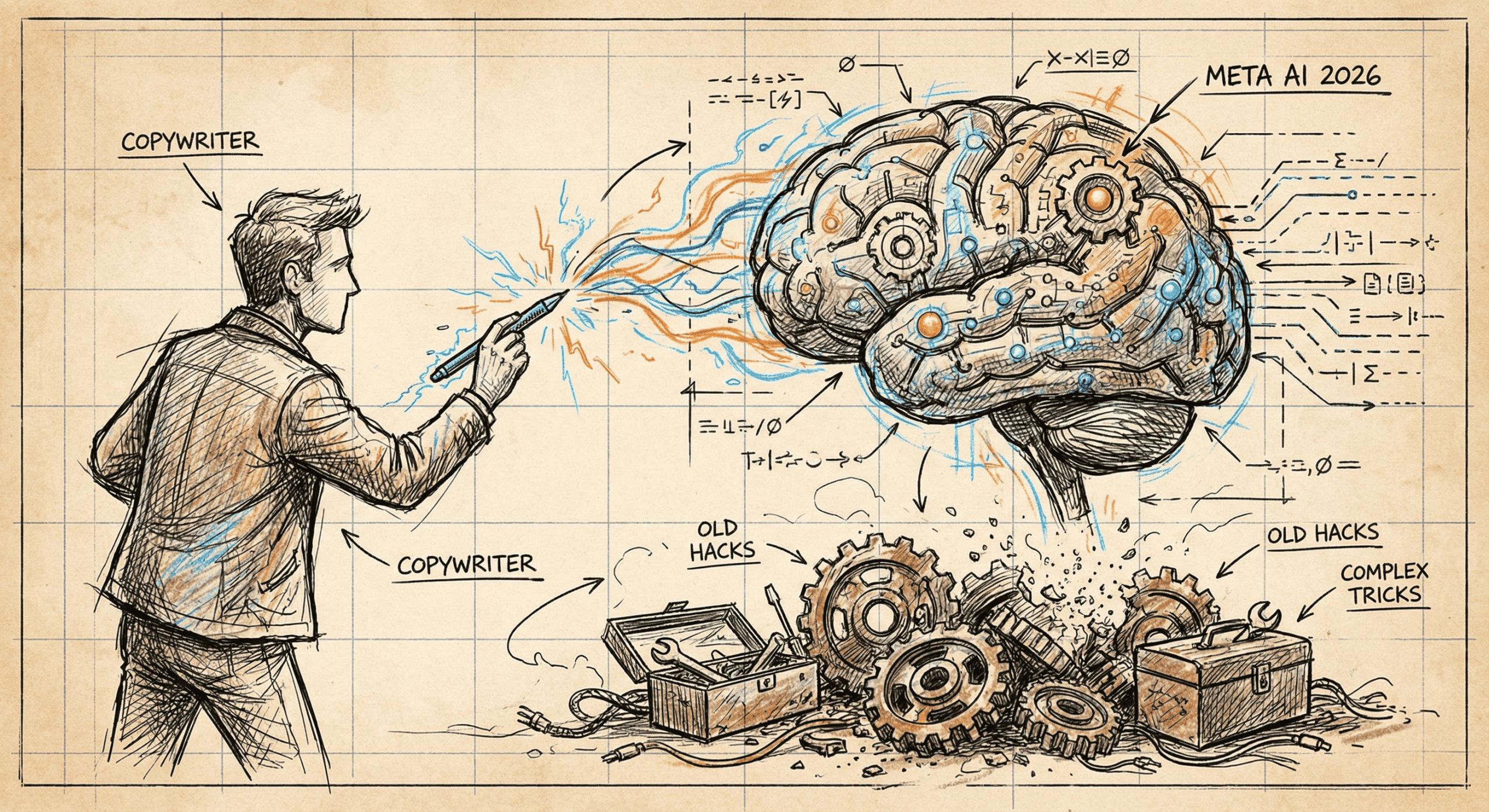

Step-by-step setup, launch, and scaling… updated for Meta’s AI-first system.
The tricks are gone.
This Facebook Ads tutorial for 2026 shows you exactly how to set up, launch, and scale profitable campaigns in today’s AI-driven Meta ecosystem… without complex targeting, gimmicks, or outdated hacks.
I am writing this to save you time… and to save you money.
There is too much noise in the marketplace right now. You have “gurus” selling complexity because complexity feels expensive. They want you to believe running Facebook ads in 2026 is a dark art… a secret code that only the chosen few can crack.
They are lying to you.
I have looked at the data from over $10 million in ad spend. Personally. I have seen what works for 3,000+ clients across every industry, generating north of $100 million in online trackable sales.
The truth is simple: The platform has matured.
What worked in 2020 is dead.
This guide reflects the updated Facebook Ads strategy for 2026.
In this guide, you will learn:
- How to structure a Facebook Ads account in 2026 for maximum stability.
- What’s changed with Facebook Ads in 2026 regarding AI and targeting.
- Which campaign objectives still work (and which ones kill your ROI).
- How copywriters win now that targeting is largely automated.
- How much to spend, what to test, and exactly when to scale.
- The exact creative framework Meta’s AI rewards today.
Quick Start: Run Your First Facebook Ad in 30 Minutes (2026)
If you want the fast track before the deep dive, here is the cheat sheet:
- Create Business Manager: Do not use your personal ad account.
- Create Ad Account: Ensure your currency and time zone are correct.
- Install Pixel + turn on CAPI: This is your data bridge.
- Create Campaign: Choose “Sales” or “Leads” objective only.
- Ad Set Settings: Select “Website,” “Maximize Conversions,” and leave targeting Broad (no interests).
- Create Ads: Launch 1–3 single image ads with direct-response copy.
- Publish & Wait: Do not touch for 72 hours.
If you follow these steps, you will be ahead of 99% of advertisers. Now, let’s go deep.
What’s Changed with Facebook Ads in 2026?
Before we open the Ads Manager, you need to understand the landscape.
If you are coming back to the platform after a break, or if you are used to the “old way” of doing things… you are in for a shock. The buttons look the same, but the engine has been completely swapped out.
This is what I’m seeing across active accounts right now:
1. AI-Driven Delivery is Default
We used to think we were smarter than the machine. We weren’t. Today, Meta’s AI (Advantage+) handles the heavy lifting. It decides who sees your ad based on millions of real-time data points that you cannot see.
2. Interest Targeting is No Longer the Main Lever
You can still select interests like “Golf” or “Small Business,” but the algorithm largely treats them as suggestions rather than strict rules. The era of “hacking” audiences by stacking interests is over.
3. Creative Volume Matters More Than Structure
In 2020, we spent all day tweaking ad sets. In 2026, the lever is the creative. The algorithm needs fresh food. If you feed it boring ads, your costs skyrocket. If you feed it engaging, human-centric ads, your costs drop.
4. Manual Optimization Matters Less
You don’t need to wake up at 4 AM to adjust bids. The system optimizes for you. Your job is not to turn the dials; your job is to provide the fuel.
5. Offers and Messaging Determine Success
This is why copywriters are the new kings of the platform. Since you can’t “out-target” the competition with settings, you must “out-write” them with better offers and sharper hooks.
Before you spend a dollar on Meta, you need an irresistible offer first. The platform amplifies what you give it. Amplify a weak offer and the platform will happily set your money on fire.
Part 1: Facebook Ads in 2026 – The Mindset Shift You Must Make
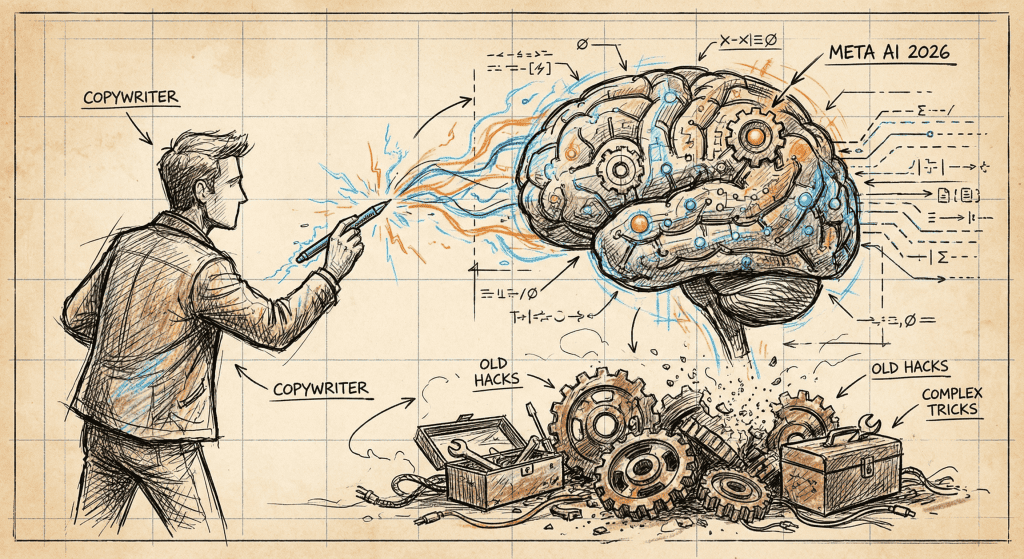
You cannot build a million-dollar business on a cracked foundation.
Most people skip the mental work. They want to know which button to click. But if you click the right buttons with the wrong mindset, you will lose money.
Here is the mental shift required for running Facebook ads in 2026…
The Algorithm Is Smarter Than You
Five years ago, we thought we were snipers.
We would spend hours building “complex” audiences.
We would target: Men, aged 35-40, who like Golf, read The Wall Street Journal, and drive a BMW.
We thought we were clever.
But we were actually limiting the machine.
Today, Meta’s AI knows who is going to buy your product better than you do.
It knows when users browse, when they buy, and when they are just scrolling out of boredom. It knows that “Bob” likes Golf, but he only buys software on Tuesday mornings when he’s on his desktop. You can’t target that. The AI can.
When you try to “force” the targeting, you are handcuffing the AI. You are telling a supercomputer to operate like a pocket calculator.
Creative Is The New Targeting
This is the most critical concept in this entire tutorial.
In the old days, you targeted people with settings. In 2026, you target people with words.
If you write an ad about “How to cure lower back pain without surgery,” the algorithm reads your text. It analyzes your image. Then, it goes out and finds people who are interacting with content about back pain.
Your copy does the heavy lifting.
If your copy is vague, the algorithm gets confused. If your copy is sharp, specific, and punchy… the algorithm becomes a heat-seeking missile for your ideal client.
You are no longer a “Facebook Advertiser.” You are an “Offer Owner.”
And the best Offer Owners aren’t running ads to client work. They’re running ads to a scalable offer they own outright… a course, a book, a coaching program.
If your offer isn’t converting, read my Info Marketing For Copywriters: How To Build A $30k/m Business Without Selling Your Time before you spend a dollar on ads.
Part 2: Structuring Your Facebook Ads Account for Success
Let’s get technical for a moment. But keep it simple.
You need a container for your ads. Most people mess this up on Day 1 and pay for it on Day 100. A messy account leads to messy data, and messy data leads to bankruptcy.
The Business Manager (The Umbrella)
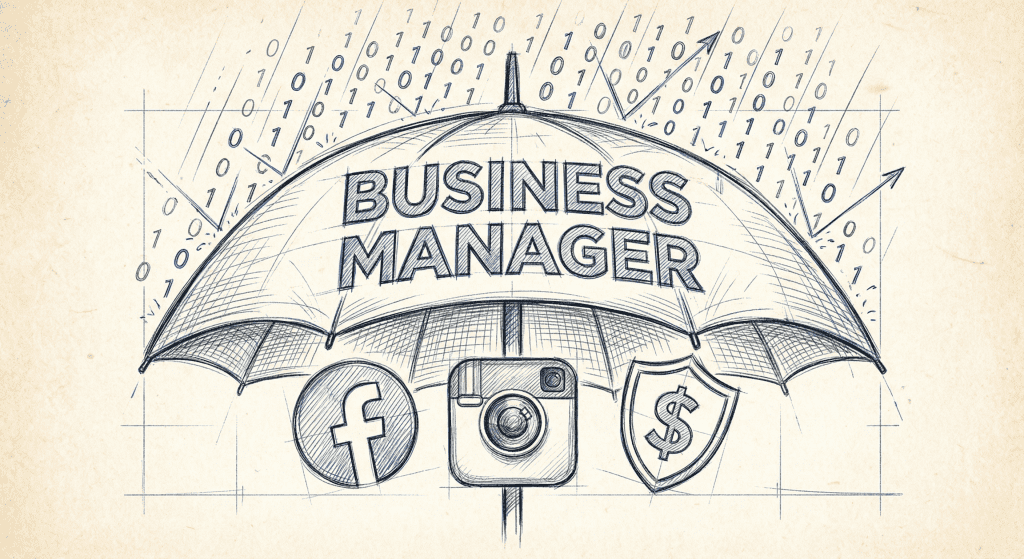
Do not run ads from your personal ad account.
It is amateur. It is risky. If your personal account gets flagged (which happens), you are dead in the water. You lose your pixel data. You lose your custom audiences. You lose everything.
You need a Meta Business Manager.
- Go to business.facebook.com.
- Create an account.
- This acts as the “umbrella” that holds all your assets securely.
Once you are inside, go to Settings and connect these three things:
1. Facebook Page This is the “face” of your ads. If you don’t have one, create it. It doesn’t need to be fancy, but it needs to look legitimate. Profile picture. Cover photo. A few posts. The algorithm looks at page activity as a trust signal.
2. Instagram Account Connect your existing professional account. Crucial: Make sure it is set to a “Professional” or “Creator” account in the Instagram settings. If it’s a personal private account, the connection will fail, and you won’t be able to run ads on IG.
3. The Ad Account This is the financial engine. Create a new one inside the Business Manager. Warning: Set your Time Zone and Currency correctly right now. You cannot change them later. I have seen clients stuck with an account in “Thai Baht” or “Pacific Time” when they live in London. It creates a nightmare for reporting. Don’t be that person.
The Pixel (The Brain)
You must install the Meta Pixel on your website.
Think of the Pixel as a bridge. It connects your website to Facebook. It tells the algorithm who bought, who clicked, and who left.
Without it, you are flying blind. You are spending money with zero feedback loop.
In 2026, because of privacy changes and browser tracking restrictions, the Pixel isn’t enough on its own. You also want to look into the Conversions API (CAPI).
Don’t let the name scare you.
The Pixel relies on the browser (which often blocks data). CAPI sends data from the server (which is more reliable). Most platforms like Shopify, WordPress, or ClickFunnels have a simple “Turn on CAPI” toggle now. Find it. Click it.
Part 3: Choosing the Right Facebook Ads Campaign Objective in 2026
Go to Ads Manager. Click the green + Create button.
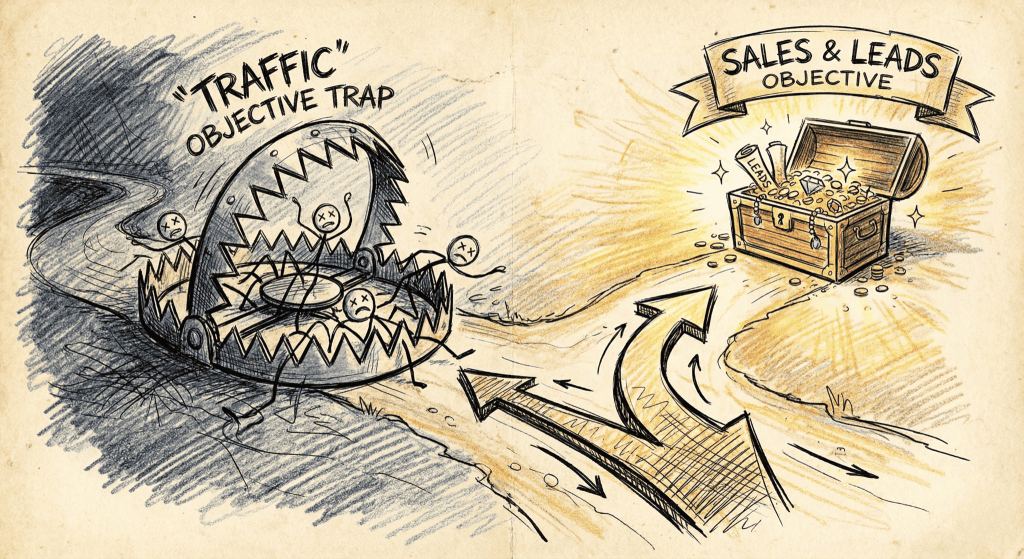
This is the first fork in the road… and it is where most people crash.
Meta will ask you for an Objective. You will see options like Awareness, Traffic, Engagement, Leads, and Sales.
The “Traffic” Trap
Never… and I mean never… choose “Traffic.”
I see this mistake every single day. “But I want traffic to my site!” you say.
Here is what the algorithm actually does: If you select “Traffic,” the AI goes into its database and finds people who are “Chronic Clickers.” These are people who click on everything but buy nothing. They are bots, curiosity seekers, and window shoppers.
You will get thousands of visitors. You will get zero revenue. You will feel good for a day, and then you will feel broke.
The Rule of Intent
You must operate with intent. You must tell the machine exactly what the end result should be.
- Choose “Sales”: If you are an e-commerce business selling products directly on a website. You want the credit card transaction.
- Choose “Leads”: If you are a service business, coach, or consultant. You want a name, email, and phone number.
Buying Type: Auction.
Advantage+ Campaign Budget: Turn this OFF.
We want control at the Ad Set level for now. When you are spending $5,000 a day, we can talk about Campaign Budget Optimization (CBO). For now, keep it simple. We want to test variables, and we can’t test variables if the machine is moving the money around constantly.
Part 4: Facebook Ads Targeting in 2026 (Why Broad Targeting Wins)
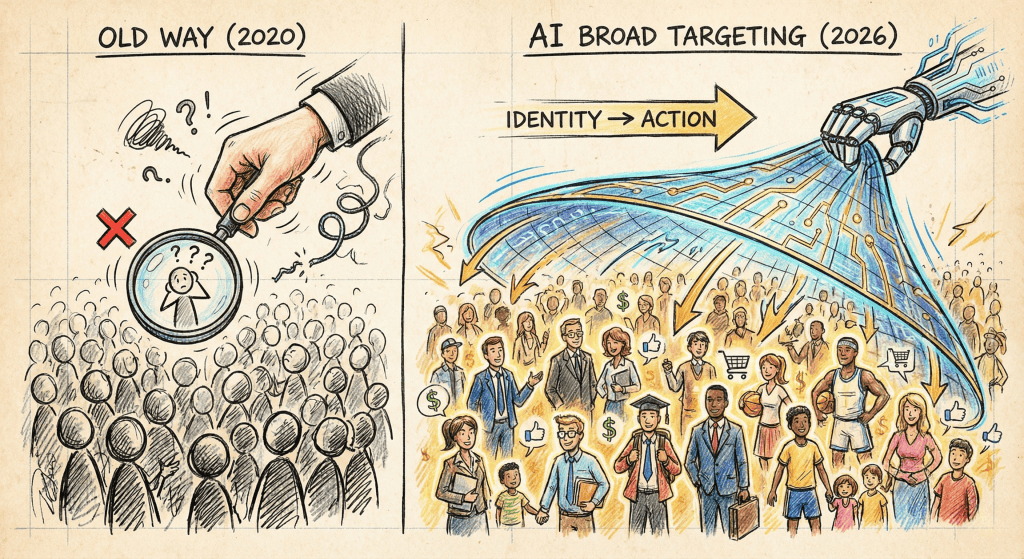
This is where the game has changed the most.
In Facebook Ads targeting in 2026, the machine is smarter than you.
The Strategy: Broad Targeting
I know this feels uncomfortable. You want to control it. You want to type in “Small Business Owners” or “Tony Robbins Fans.”
Resist the urge.
When you restrict the audience, two things happen:
- CPM (Cost) goes up: You are fighting for a smaller pond of people. You are bidding against everyone else who had the same obvious idea.
- Performance goes down: You are limiting the AI’s ability to find buyers outside your guess.
Here is the setup:
- Location: Target the countries you serve (e.g., US, UK, Canada).
- Age: Keep it broad (e.g., 25-55+).
- Gender: All (unless you sell bras or beard oil).
- Detailed Targeting: Leave it BLANK.
Yes. Blank.
“But how will it find my people?”
It finds them through your content. If you run an ad for a “Copywriting Course,” the algorithm will show it to a few random people. The people who stop scrolling… the people who click… they send a signal. Meta says: “Aha. People who behave like THIS are interested.” Then it goes and finds more people like them.
Trust the data. Broad targeting allows you to access the cheapest inventory while letting the AI do the heavy lifting of sorting the prospects.
Placements
Select Advantage+ Placements.
Do not manually select “Feed Only.” Let Meta show your ad on Reels, Stories, Feeds, Search, and Audience Network.
Why? Because inventory is cheaper in different places at different times. Sometimes, your next customer is doom-scrolling Reels at 2 AM. Sometimes they are on the Feed at 10 AM. Let the algorithm find the cheapest conversion for you.
If you need help capturing these leads once they click, read my article on finding your ideal client avatar to ensure you aren’t wasting the traffic.
Stop Targeting Broke People.
Find Your Perfect Buyer In 60 Seconds.
This FREE tool shows you exactly who to pitch, what to say, and how to close them fast.
Built From $100M In Direct-Response Sales.
Generate My Perfect Buyer Profile Now
(100% FREE)
Part 5: Budgeting Strategy: Daily vs. Lifetime Budgets
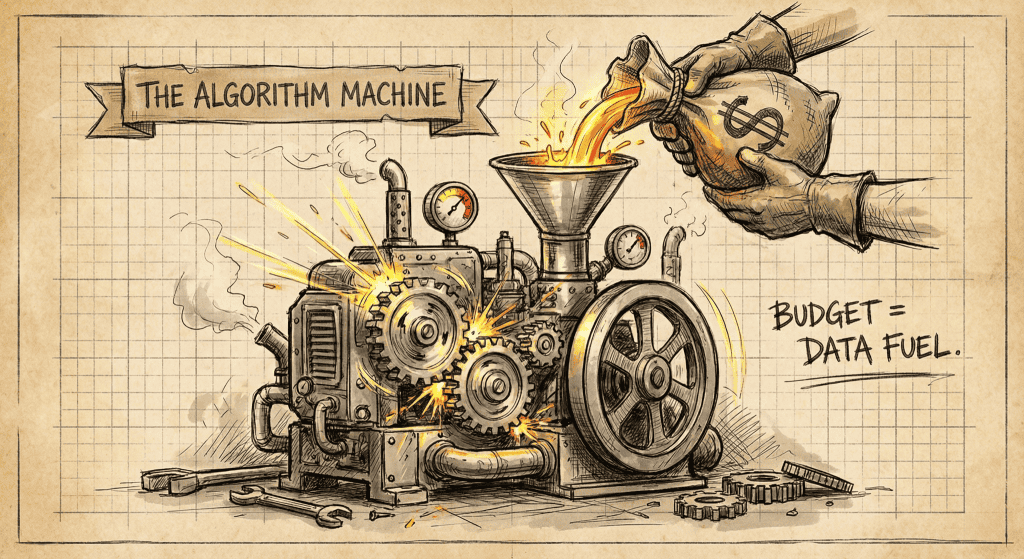
Money brings up a lot of fear. Let’s remove the emotion from it.
Daily vs. Lifetime
Always use Daily Budget.
Lifetime budgets are erratic. They spend inconsistently. If you set a Lifetime Budget for 30 days, and you have a bad week, you are stuck. You have committed that cash.
Daily budgets give you freedom. You can scale up on good days. You can pause on bad days. You have your hand on the faucet.
How Much to Spend?
This is the most common question I get. “Is $10 enough?”
Here is the math of the algorithm: It needs data to learn.
It needs about 50 conversions a week to stabilize.
If you spend $5 a day, and your cost per lead is $10… you are getting one lead every two days. It will take months to get statistically significant data.
If you spend $50 or $100 a day, you learn in a week.
The Rule: Spend an amount you can afford to lose… but high enough that you buy data quickly. Think of your first week of ad spend not as “marketing,” but as “tuition.” You are paying to learn what works. You are buying data.
If you cannot afford to spend at least $30-$50 per day, you might not be ready for paid ads yet. Focus on organic or cold outreach until you have the budget to fuel the machine properly.
Part 6: The Ad Creative: Writing High-Converting Facebook Ads
This is it. This is the variable that matters. This is where you, the copywriter, win the game.
You can have the best settings in the world… the best pixel setup… the perfect budget… But if your ad is boring, you will fail.
The Format
Start with a Single Image. I know, everyone says “Video is King.” Video is great. But video is hard to make. It takes time. It takes editing. It takes scripting.
A single image is fast. You can test 5 images in the time it takes to edit one video. And often… the single image outperforms the video.
The Image Strategy
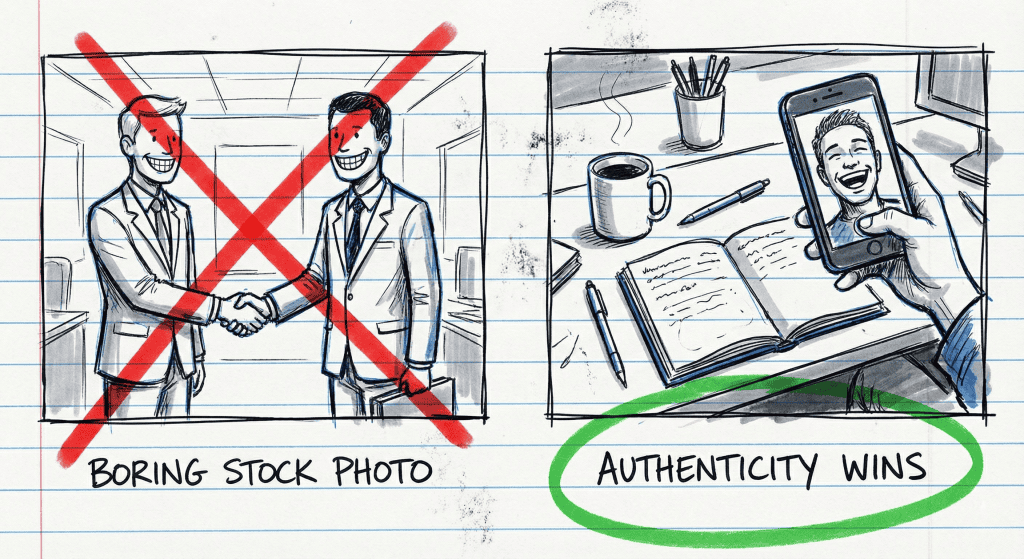
Stop using stock photos. If your ad looks like an ad, people will scroll past it. We have “banner blindness.”
Authenticity wins.
- Use real photos of real people.
- Use a photo of you holding the product.
- Use a photo of your messy desk.
- Use a selfie.
- Use a screenshot of a Tweet or a Note.
A photo of you in a natural environment builds trust instantly. It stops the scroll because it looks like a post from a friend.
The Copy Structure (The Words)
This is your wheelhouse. Do not get cute. Do not try to be clever. Be clear.
Direct response copywriting for ads is its own discipline. Same psychology as a sales letter, but compressed into 4 seconds of attention.
Use this structure for your Primary Text:
1. The Hook Call out the problem or the person immediately. You have 0.4 seconds to get their attention.
- Bad: “Welcome to my business page.”
- Good: “Tired of wasting money on Facebook Ads?”
- Good: “If you are a freelance copywriter, read this.”
2. The Agitation Twist the knife. Show them you understand the pain. Empathy creates authority.
- Ex: “It feels like you’re lighting cash on fire. You stare at the Ads Manager hoping for a sale, but all you see is red.”
3. The Solution (The Reframe) Present your new mechanism.
- Ex: “The problem isn’t your budget. It’s your offer. My mentorship program fixes the root cause.”
4. The Benefit What is life like after the solution?
- Ex: “Imagine waking up to 5 qualified leads in your inbox every morning.”
5. The Call to Action (CTA) Tell them exactly what to do.
- Ex: “Click Learn More to apply.”
AI Enhancements
When you upload your creative, Meta will ask to “Enhance” your ad. It will offer to add music, brighten the image, or swap text.
- Visual Enhancements: Generally okay.
- Text Enhancements: Turn these OFF. Do not let the AI rewrite your copy. It does not understand your voice. It does not understand persuasion. It writes generic fluff. Keep control of your words.
Part 7: Launch and Review: Analyzing Facebook Ad Metrics
Hit Publish.
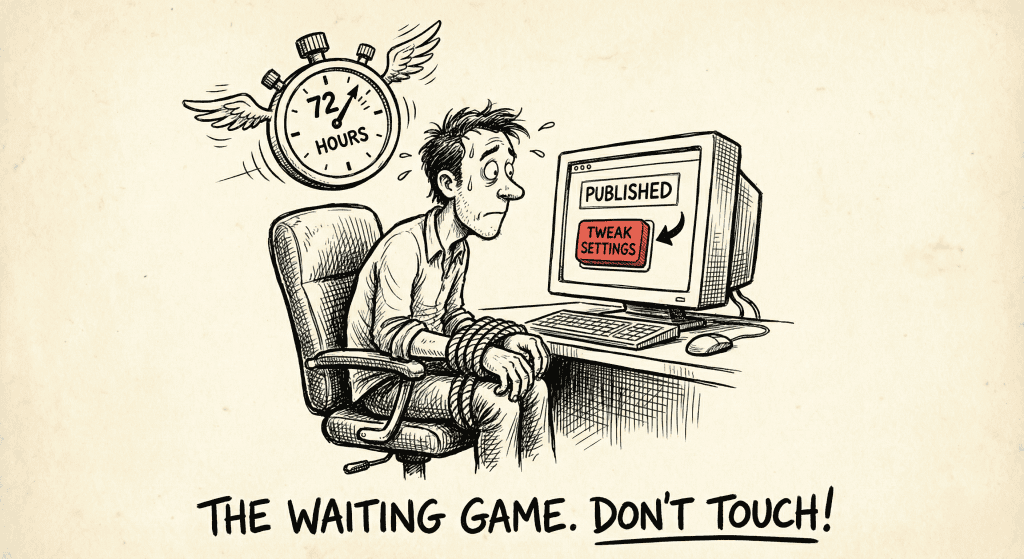
Now, the hardest part begins. The Waiting Game.
The 72-Hour Rule
Do not touch your ad for 72 hours. I know you want to check it every 10 minutes. I know you want to refresh the screen.
Stop it.
The algorithm goes into the “Learning Phase.” It is testing different pockets of people.
- If you edit the budget… you reset the learning.
- If you change the headline… you reset the learning.
- If you pause and unpause… you reset the learning.
Sit on your hands. Let the machine work.
How to Read the Data (After 72 Hours)
After three days, look at the numbers. But don’t look at all of them. Ignore “Reach.” Ignore “Impressions.” Ignore “Likes.” You cannot deposit “Likes” at the bank.
Look at these three metrics in order:
1. Cost Per Result (CPR) This is your North Star. Are you getting leads for a price that makes sense? If you can afford $20 per lead, and you are getting them for $15… Do not touch anything. I don’t care if the CTR is low. I don’t care if the image is ugly. If the money works, the ad works.
2. Click-Through Rate (CTR) If your Cost Per Result is too high, look here. A good CTR is usually above 1%.
- If CTR is Low (below 1%): Your Hook or your Creative is the problem. People are not stopping. They aren’t interested.
- Fix: Test a new image or a sharper headline.
3. Conversion Rate (CR) This isn’t in the Facebook dashboard; it’s on your landing page.
- If CTR is High (lots of clicks) but Sales are Zero: Your ad is fine. Your ad did its job. It brought people to the door.
- The Problem: Your website/offer sucks.
- Fix: Rewrite the landing page. Make the offer better.
Part 8: The “Secret” Sauce: Sales Energy

If you want to dominate this year, you need to understand one final concept.
Ads are not just pixels and text. They are a transfer of energy. If you write your ads from a place of desperation (needing the sale, begging for the click) the audience feels it. It repels them.
If you write your ads from a place of conviction—knowing your offer changes lives, standing in your authority—the audience feels that too. It magnetizes them.
The “tactic” is the container. The “energy” is the fuel.
Most copywriters focus on the words. The great ones focus on the truth behind the words.
When you sit down to write your ad:
- Visualize the person you are helping.
- Feel the relief they will feel when they use your product.
- Write to that person.
Do not write to “the market.” Write to the human.
Get The Full Book Here For Free (No Optin Required.)
Summary: Your 2026 Roadmap
Let’s recap. You don’t need a degree in data science. You don’t need to hire a $5,000/month agency.
You need:
- A Clean Structure: Business Manager, Page, Ad Account, Pixel/CAPI.
- The Right Objective: Sales or Leads. Never Traffic.
- Broad Targeting: Let the copy do the work.
- Daily Budget: Maintain control.
- Authentic Creative: Real photos, direct copy.
- Patience: The 72-hour rule.
That is the playbook. The rest is just noise.
The market is waiting for your offer. The platform is ready for your ads. The only variable left is you.
Go build.
P.S. Ads don’t fix weak offers. They expose them.
If you pour gas on a broken engine, you don’t get speed… you get a fire.
If you are ready to build an offer worth scaling, let’s fix your foundation.